
There is a problem spreading silently through Pakistani workplaces in offices, on factory floors, inside hospital corridors, and across construction sites. Employees are showing up every day carrying weight that nobody talks about. Stress that goes unaddressed. Burnout that gets mistaken for laziness. Anxiety that hides behind silence.
Most organizations do not see it. And the ones that do see it often have no idea what to do about it.
In 2026, the conversation around workplace mental health is no longer optional. Globally, organizations are recognizing that a workforce struggling with mental health cannot perform, innovate, or sustain. In Pakistan, that recognition is arriving slowly, but with urgency. The employers who act on it now are the ones who will build stronger, more loyal, and more productive teams in the years ahead.
This is where workplace mental health training comes in. And this is why it matters more than most Pakistani organizations currently realize.
The Workplace Mental Health Gap Nobody Is Talking About
Pakistan has a mental health awareness problem. Not because mental health issues are rare they are not. The problem is that the culture around mental health in professional environments remains largely one of silence, stigma, and avoidance.
In most Pakistani organizations, there is no formal structure for employees to raise mental health concerns. There is no training for managers on how to recognize when a team member is struggling. There is no policy that distinguishes mental health leave from absence without reason. Employees who speak about anxiety or stress risk being seen as weak or uncommitted.
The result is a workforce that suffers quietly and an organization that never understands why productivity drops, why good people leave, and why teams underperform despite technical skills being in place.
Why Pakistani Workplaces Are Particularly Vulnerable
Pakistani professional culture places enormous pressure on individuals to appear capable, composed, and unbothered at all times. Admitting to stress or mental difficulty is often seen as a professional risk. This cultural reality means that employees who are genuinely struggling are the least likely to ask for help and organizations that have no training in place are the least equipped to offer it.
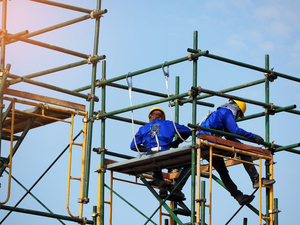
Industries like construction, manufacturing, healthcare, and oil and gas carry especially high levels of occupational stress. Long hours, physical risk, high stakes decisions, and job insecurity create environments where mental health challenges are common but virtually never addressed professionally.
What Workplace Mental Health Training Actually Means
Many people hear “mental health training” and picture therapy sessions or wellness seminars. That is not what professional workplace mental health training is.
Workplace mental health training is a structured, skills based program that teaches managers, supervisors, HR professionals, and employees how to recognize the signs of mental health challenges, respond appropriately, create psychologically safe environments, and connect people to the right support at the right time.
It is practical. It is workplace-specific. And it is built around the realities of what people actually face in professional environments not clinical settings.
It Goes Beyond Awareness
Awareness alone changes nothing. An organization that runs a single mental health awareness session and considers the matter addressed has done very little. Real workplace mental health training goes deeper.
It teaches managers how to have sensitive conversations without crossing professional boundaries. It helps HR professionals understand what reasonable support looks like and how to implement it. It gives team leaders the language and the confidence to check in with their teams in ways that are genuine and useful rather than awkward and performative.
Most importantly, it shifts organizational culture over time. When mental health is talked about openly, trained for systematically, and supported structurally, the stigma that keeps employees silent begins to break down.
Who Needs Mental Health Training in the Workplace?
The short answer is everyone but not in the same way.
Employees benefit from understanding what mental health means in a workplace context, what resources are available to them, and how to support colleagues who may be struggling. This baseline awareness makes a meaningful difference to how people relate to each other and how they manage their own wellbeing at work.
It Is a Leadership Issue Too
Managers and team leaders carry a specific responsibility that goes beyond their operational role. They are often the first to notice when someone on their team is struggling. They set the tone for whether it is safe to speak honestly about pressure and difficulty. They make decisions every day that directly affect the mental wellbeing of the people they lead.
Without training, most managers handle mental health situations in one of two ways they either ignore the signs entirely, or they intervene in ways that are well-intentioned but poorly judged. Training gives them a third path: confident, appropriate, and genuinely supportive action.
HR professionals and organizational leaders need a strategic understanding of workplace mental health, how to build policies, create support systems, and embed mental health consideration into the way the organization is run at every level.
The Transformation That Happens After Mental Health Training
Organizations that invest seriously in workplace mental health training report changes that go far beyond what they expected.
For Employees
The most immediate change is one of safety. When people know that mental health is understood and supported in their workplace, they stop hiding. They reach out earlier, before small problems become serious ones. They communicate more honestly with their managers. They feel that their employer sees them as a full human being rather than a unit of output.
Over time, this creates a workforce that is more engaged, more resilient under pressure, and more committed to the organization they work for. People do not leave environments where they feel genuinely supported.
For Organizations
The organizational benefits of a mentally healthy workforce are significant across every metric that matters. Teams with strong psychological wellbeing collaborate more effectively, solve problems more creatively, and sustain performance over longer periods without the burnout that derails high achieving teams.
Organizations that are known for taking employee wellbeing seriously also attract better talent. In a competitive hiring landscape, the culture of an organization matters enormously to the professionals choosing where to build their careers.
Why 2026 Is the Right Time to Act in Pakistan
Several forces are converging in 2026 to make workplace mental health training more relevant for Pakistani organizations than ever before.
International clients and global supply chains are increasingly evaluating not just the technical and safety standards of their partners, but their approach to workforce wellbeing. Export facing companies in Pakistan’s textile, pharmaceutical, and manufacturing sectors are beginning to face questions about employee welfare that go beyond physical safety.
Domestic regulatory attention on workplace health which has traditionally focused entirely on physical safety is beginning to expand its scope. Organizations that build strong mental health frameworks now will be ahead of requirements that are likely to formalize in the coming years.
And beyond regulation, the simple competitive reality is that talented professionals are becoming more selective about where they work. Organizations that offer genuine wellbeing support retain their best people. Organizations that do not, lose them.
How Qanmos Trainings Is Addressing This Gap
Qanmos Trainings has long understood that professional development goes beyond technical certifications. Alongside its internationally recognized safety and technical qualifications, Qanmos offers dedicated mental health training programs designed for the realities of Pakistani workplace environments.
Training at Qanmos is delivered by experienced professionals who bring practical, contextually relevant knowledge into every session. Programs are designed for organizations across sectors from manufacturing and construction to healthcare and corporate and can be tailored to address the specific challenges of a given industry or workforce.
With branches across seven cities including Lahore, Karachi, Islamabad, Rawalpindi, Multan, Peshawar, and Abbottabad, Qanmos is positioned to deliver workplace mental health training to organizations across Pakistan at the organizational level for companies, and at the individual level for professionals who want to carry this expertise into their careers.
Frequently Asked Questions
What is workplace mental health training?
Workplace mental health training is a structured program that equips employees, managers, and HR professionals with the knowledge and skills to recognize, support, and manage mental health challenges within a professional setting.
Why does my organization need mental health training?
Organizations without mental health training often face higher employee turnover, lower productivity, and poor team morale. Training creates a healthier culture where people perform better and stay longer.
Is workplace mental health training only for large companies?
Not at all. Small and medium sized organizations benefit just as much, sometimes more because leadership is closer to the workforce and can apply what they learn immediately and directly.
Who should attend mental health training at the workplace?
Ideally, everyone from senior leadership to team supervisors and front line employees. Different programs can be designed for different levels within an organization.
Is mental health training different from general HR training?
Yes. While general HR training covers policies, compliance, and people management, mental health training specifically focuses on psychological wellbeing, early recognition of distress, and creating psychologically safe environments.
Can mental health training be conducted on-site at our organization?
Yes. Qanmos Trainings offers flexible delivery options, including on-site sessions tailored to your organization’s specific industry and workforce needs.
How long does a workplace mental health training program take?
Program length varies depending on the depth and audience. Qanmos advisors can recommend the most suitable format for your team’s needs.
Is this training relevant for industries like construction and manufacturing?
Absolutely. High pressure, physically demanding industries carry some of the highest occupational stress levels of any sector making mental health training particularly valuable in these environments.
How does mental health training connect to overall workplace safety?
Mental health is a core component of holistic workplace safety. Physical and psychological wellbeing are deeply linked, and organizations that address both build significantly safer and more productive environments.
Where can I enroll in workplace mental health training in Pakistan?
Qanmos Trainings offers workplace mental health programs across Pakistan. Contact the team directly for information on scheduling and course options.
Conclusion
The organizations that will define Pakistani industry in the next decade are not simply the ones with the best equipment or the strongest technical teams. They are the ones that understand people — their full complexity, their capacity to contribute, and their need to be genuinely supported.
Workplace mental health training is not a wellness trend. It is a foundational investment in the human infrastructure that every organization runs on. In 2026, the question Pakistani organizations need to ask is not whether they can afford to take mental health training seriously. It is whether they can afford not to.
Take the First Step with Qanmos Trainings
Qanmos Trainings is ready to help your organization build a mentally healthier, more resilient workforce. Whether you are an HR professional, an organizational leader, or an individual looking to carry mental health expertise into your career, Qanmos has the right program for you.