
Every week, thousands of Pakistanis search for one thing: a stable, high-paying career that works both locally and abroad. What most of them don’t realize is that the answer is already in front of them — a career as a certified Safety Officer.
With industrial growth, CPEC expansion, and Gulf megaprojects running at full speed, the demand for qualified HSE professionals in 2026 has never been higher. And the best part? You do not need a four-year degree to get started. You need the right certification, the right training, and a clear roadmap.
This guide gives you exactly that.
Who Is a Safety Officer?
A Safety Officer is a trained professional responsible for identifying workplace hazards, preventing accidents, and ensuring that an organization complies with national and international safety regulations. They work across industries including construction, oil and gas, manufacturing, food production, logistics, and healthcare.
In 2026, this role carries serious professional weight. Companies that fail to maintain certified safety staff risk contract losses, legal penalties, and reputational damage. That is why Safety Officers are not just hired, they are protected assets.
Step 1: Understand the Qualifications Employers Actually Want
Before spending money on any course, understand what the job market demands. In Pakistan and across the Gulf, the certifications that appear on almost every HSE job posting are:
NEBOSH IGC — The International General Certificate from the UK’s National Examination Board in Occupational Safety and Health. Recognized in over 180 countries and considered the benchmark for entry-level safety professionals worldwide.
IOSH Managing Safely — A shorter awareness level course, suitable for managers and supervisors. Valuable but not a replacement for NEBOSH when it comes to safety-specific roles.
OSHA — An American standard widely accepted in industrial and construction sectors, particularly valued by companies with US affiliations.
For anyone serious about building an HSE career in Pakistan or targeting Gulf employment, NEBOSH IGC is the starting point.
Step 2: Choose an Accredited Training Provider
This step is where many students make costly mistakes. Not every institute that claims to offer NEBOSH is an official NEBOSH accredited center.
An accredited center means your certificate is registered, verifiable, and accepted by employers worldwide. A non accredited center means your certificate may be worthless the moment an employer checks its authenticity.
Qanmos Trainings is an officially accredited NEBOSH center in Pakistan, registered under Center Number 1535 with NEBOSH UK. With branches in Lahore, Karachi, Islamabad, Rawalpindi, Multan, Peshawar, and Abbottabad, Qanmos is accessible to students across the country.
Step 3: Complete Your NEBOSH IGC Training
At Qanmos, the NEBOSH IGC is delivered as an intensive classroom program.
The course covers:
Workplace hazard identification and risk assessment, health and safety management systems, legal frameworks and international compliance standards, practical skills for real industrial environments, and preparation for the NEBOSH open book examination and practical assignment.
The open book exam format introduced by NEBOSH rewards genuine understanding over memorization, making qualified candidates even more valuable to employers.
Step 4: Build Real World Experience
Certification opens the door. Experience keeps you in the room.
After completing your NEBOSH IGC, aim to gain practical exposure through site work, internships, or entry level HSE assistant roles. Even six months of documented field experience significantly increases your employability and salary expectations.
Many Qanmos graduates enter the job market immediately through the institute’s employer network and placement support.
Step 5: Target the Right Job Markets
Pakistan and the Gulf are both active hiring zones for certified Safety Officers in 2026.
In Pakistan, the strongest demand comes from CPEC infrastructure projects, textile export manufacturers (where international buyers require certified HSE staff), pharmaceutical companies, and large construction firms.
In the Gulf, Saudi Arabia’s Vision 2030 projects, UAE construction and hospitality sectors, and Qatar’s continued infrastructure development are generating thousands of safety job openings annually. Pakistani professionals with NEBOSH IGC are actively preferred in these markets because of their technical competence, English proficiency, and professional work ethic.
Salary ranges for NEBOSH-certified Safety Officers currently sit between PKR 80,000 and 200,000 per month locally, and USD 1,500 to 4,000 per month in the Gulf, tax free.
Step 6: Keep Growing with Advanced Certifications
Your NEBOSH IGC is not a finishing line, it is a launchpad.
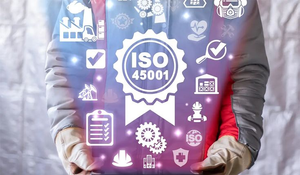
After gaining experience, consider progressing to the NEBOSH Diploma, OTHM Level 6 or Level 7 Diploma in Occupational Health and Safety, or ISO 45001 Lead Auditor certification. Each level adds salary power, professional credibility, and access to senior management roles.
Qanmos offers a full progression pathway from foundation level to advanced diploma, meaning you never have to look elsewhere as your career grows.
Why 2026 Is the Best Year to Start
Regulatory pressure is increasing. International buyers are demanding safety compliance. Gulf hiring cycles are running at peak. CPEC projects are entering high-activity construction phases.
Every month you delay is a month someone else fills the role you are qualified for.
Start Your Safety Career with Qanmos Today
Qanmos Trainings has produced thousands of certified HSE professionals who are now working across Pakistan and internationally. With accredited instructors, structured training, and real job placement support, Qanmos is the most trusted name in safety education in Pakistan.